Updated 3 months ago
Your guide to solar panel mounts in 2025
Written by Ana Almerini Ana AlmeriniAna is the Marketing & Communications Manager at SolarReviews, working within the solar industry since 2020. With a Master's in Climate and Society an...Learn more

Why you can trust SolarReviews
SolarReviews is the leading American website for solar panel reviews and solar panel installation companies. Our industry experts have a combined three decades of solar experience and maintain editorial independence for their reviews. No company can pay to alter the reviews or review scores shown on our site. Learn more about SolarReviews and how we make money.
As the industry has expanded rapidly in recent years, the technology used to mount solar panels to residential rooftops has experienced incredible innovation and rapid growth. Solar panel mounting systems are now available for all kinds of roofs, from asphalt shingles to clay tiles, to standing seam metal, and everything in between.
Modern solar mounting systems consist of roof attachments (with or without flashing), mounting rails, and module clamps. These products are designed to allow workers to quickly and effectively install solar panels that will last for decades on the roof, with minimal effect on the roofing materials and no roof leaks. Ground-mounted racks are also available.
There are many options for what you need, no matter your roof style or ground mounting system necessities. Your solar installer will know the best option to get the most use out of your solar system.
Below is our expert review of solar panel mounting solutions, which highlights the top three solar panel mount brands, and discusses the pros and cons of rooftop solar systems versus ground-mounted systems.
What is solar panel mounting and racking?
Solar panel mounts and racks are equipment that secures solar panels in place.
Mounting allows the panels to be adjusted for optimal tilt, which can be based on latitude, seasons, or even time of day — to ensure maximum solar energy production. The most common locations for mounting are on the roof, using solar roof mounts, or on the ground with ground-mount options.
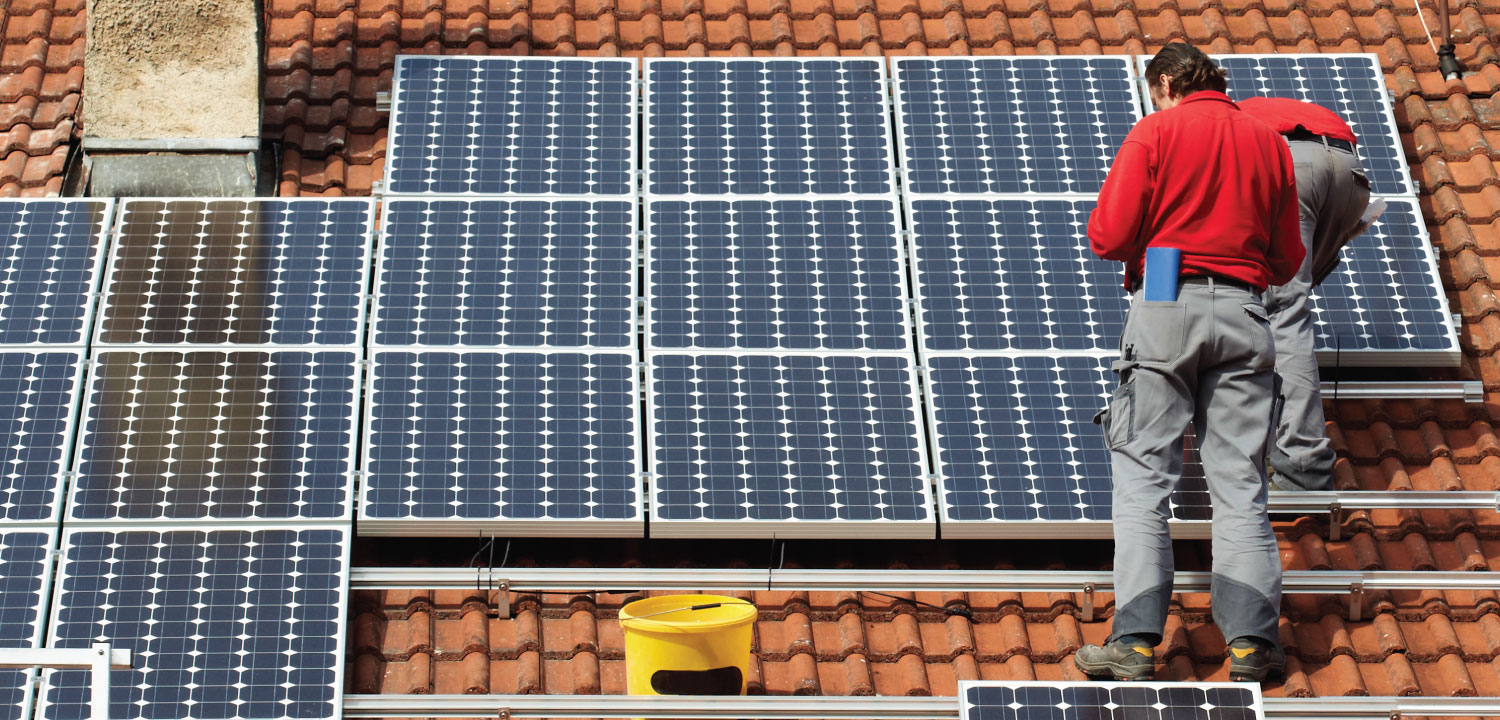
Mounting systems are the metal racks that hold up solar panels either on roofs or on the ground.
In terms of cost, mounts and racking typically account for about 10% of the total cost of an average solar system. For example, if your solar system cost $10,000, the racking system portion would be about $1,000 of the total cost.
The price will depend on the type of racking you use, the amount of equipment needed, and labor costs for installation.
The most common technique of module mounting is using a solar panel mounting bracket. Mounting brackets are heavy-duty equipment, usually made from stainless steel or aluminum. All solar racking and mounting products, whether for the rooftop or ground, must meet strict guidelines to ensure durability and structural integrity to withstand high winds and weather events.
Next, we will walk you through the main components that make up racking equipment so you can better understand the structure that will support your solar panels.
What are the most important components of a racking system?
Solar panel racking equipment is built with 3 main components:
Roof attachments
Module clamps
Mounting rails
Each tool plays a key role in how the structure supports your panels, to ensure you get the most amount of solar power out of them.
Roof attachments
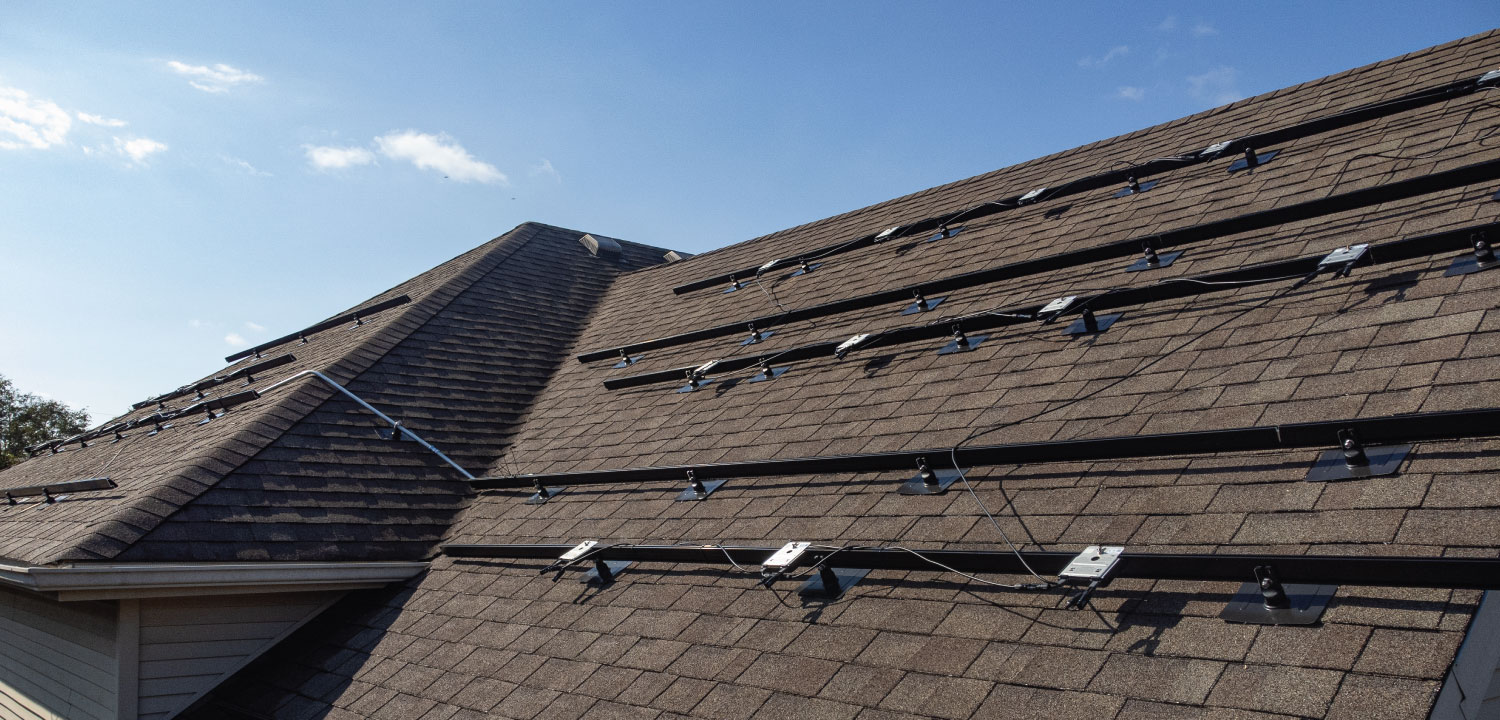
The roof attachments are the fasteners that will be drilled into your roof in order to secure the racking system in place.
The holes these drills create will be surrounded by ‘flashing’, which is a plastic or metal shield that is inserted between shingles to prevent water from getting into the hole. However, roof attachments differ for each roof type.
To dig a little deeper, take a look at more information on installing solar panels on clay tile roofs, metal roofs, and flat surface roofs.
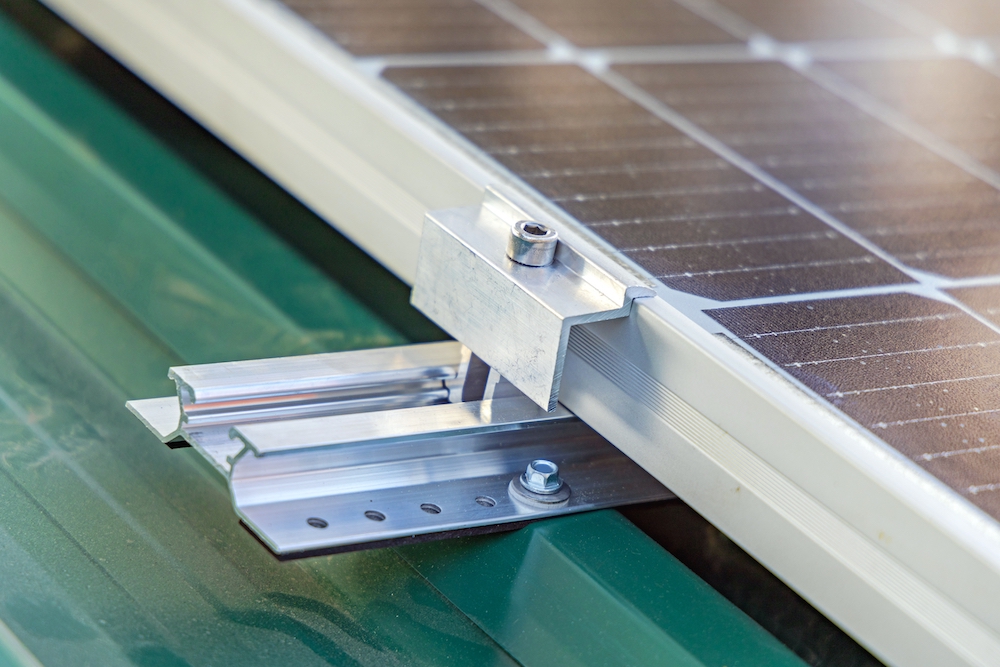
Roof attachments are drilled into the roof and sometimes secured with flashing to protect against water.
Module clamps
The module clamps attach the drilled-in roof attachments to the mounting rails. There are a few different module clamp types for each angle and corner of the solar panel.
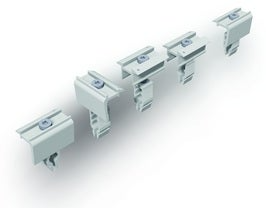
Module clamps come in a few different sizes and shapes to secure the roof attachments at every angle. Image source: PV Europe
Mounting rails
After drilling into the roof, the roof attachments are then connected to mounting rails via module clamps that will then support the solar panels.
Although there are railless racking options available, rails are most commonly used because they can be secured to most roof angles, and because many installers are trained using rail mounting systems.
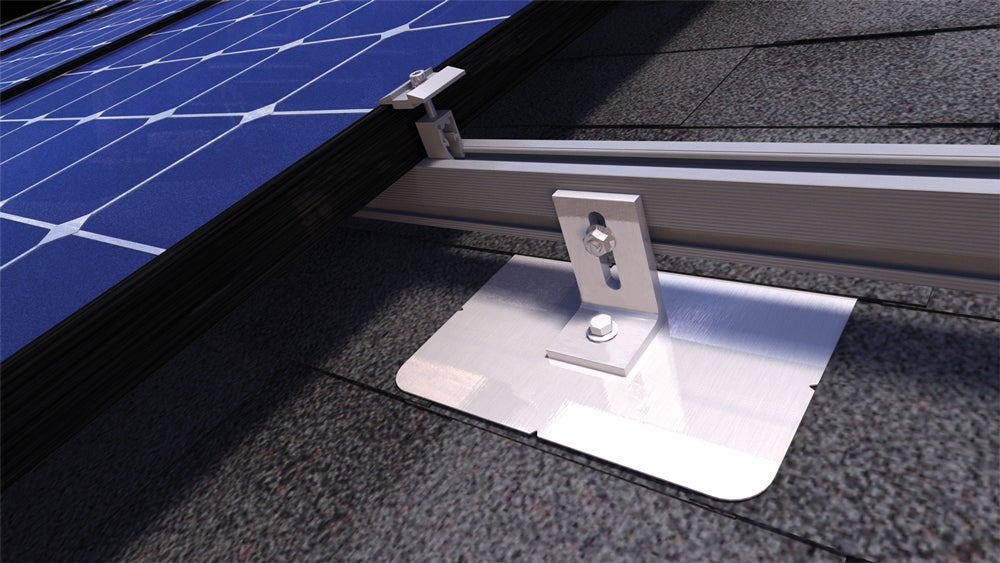
Mounting rails are attached to the roof via the roof attachments and are able to angle solar panels properly to most angled roofs. Image source: Solar Builder Mag
While many manufacturers produce solar panel mounts, only a handful of companies come out on top when it comes to quality. You can’t really go wrong with IronRidge, Quick Mount and Unirac, but we will walk you through the pros and cons of each brand.
Which roof mount brands are best?
The top two high-quality solar mounting and racking brands are:
Ironridge
Unirac
Ironridge
Originally, IronRidge supported mostly small, off-grid projects. But today, IronRidge is known for its uniquely shaped and durable XR rail series for pitched roofs. They have equally great options for flat roofs and ground mounts, as well.
Unirac
Unirac sells mounts for flat roofs and fixed-tilt ground-mount frames. Unirac’s solar mounts each come with different tilts, allowing the direction of the solar array to be independent of the angle of the roof, ensuring the best productivity.
Each brand offers no obvious weaknesses, and each offers very innovative mounting and racking kits to meet most solar needs.
You can buy any option through a local solar equipment supplier for DIY projects. But if you work with a solar installer, they will buy the panel mounts for you since they know what will work best with your roof and solar panels.
Where to buy solar panel mounts
Tackling a solar panel project DIY-style can make things a bit more complicated. Most of the time, you cannot go out and buy a fully-constructed solar panel mount system. You need to buy each individual part separately to then form a complete mount. If DIY is the route you want to go, buying entire solar panel kits with their corresponding racking solutions makes things easier.
If you are not purchasing a kit, you can browse racking equipment on the AltE website and purchase the different components that make up the racking system. Just make sure they are the proper size for the solar panels you purchase.
The best way to make ensure your solar installation goes off without a hitch (and uses the proper equipment suited for your specific roof) is to work with a licensed solar installer.
Which ground-mount system is best?
A problem with rooftop solar is that it’s heavily constrained by the characteristics of your roof. Homeowners who install ground-mounted solar panels do so for one of three reasons:
They have insufficient roof space
Their roof faces north - which is bad for panel output
They want to optimize the performance of their system
Solar panels produce the most energy when they’re facing south. Depending on the orientation of your house, this isn’t always an option. On a roof, there might be further limitations like shade from surrounding buildings and trees.
Options to choose from include ground mounts that can be secured into the ground or ballasted mounts. Ballasted mounts sit on top of the ground and are not secured in - but are held down by the weight of the panels themselves. Ballasted ground mounts tend to be more popular since there is no drilling required for installation.
The best options for ground mounts also come from the top brands, Ironridge and Unirac.
Ironridge Ground Mount Systems
These are built to be long-lasting, flexible, and withstand any weather. They also come with a 25-year warranty.
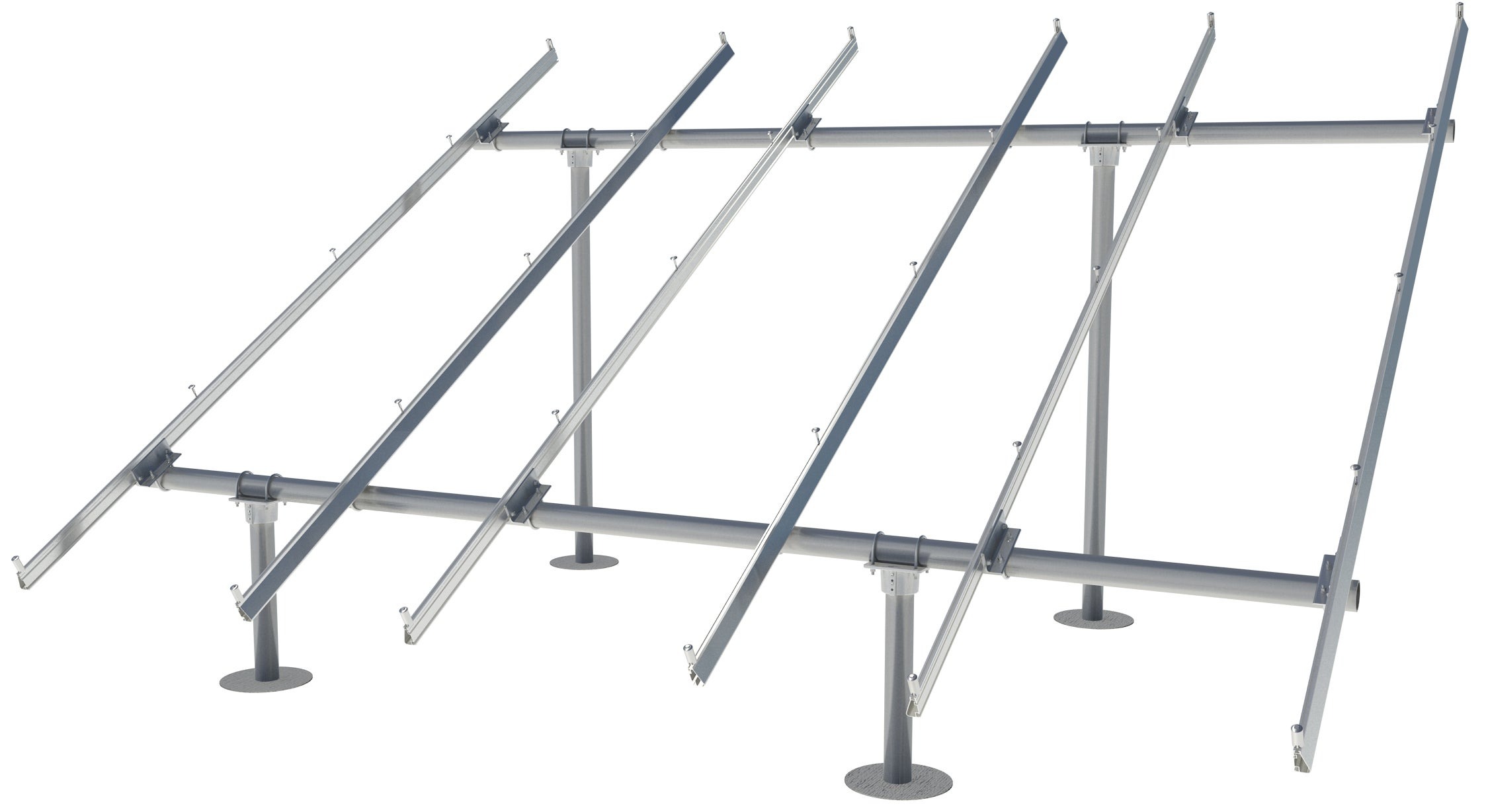
Image source: Ironridge
Pricing is difficult to pinpoint because it will depend on the size of your solar array, costs of material at the time of purchase, and the fact that many suppliers ask that you request a quote.
Unirac Ground Fixed Tilt
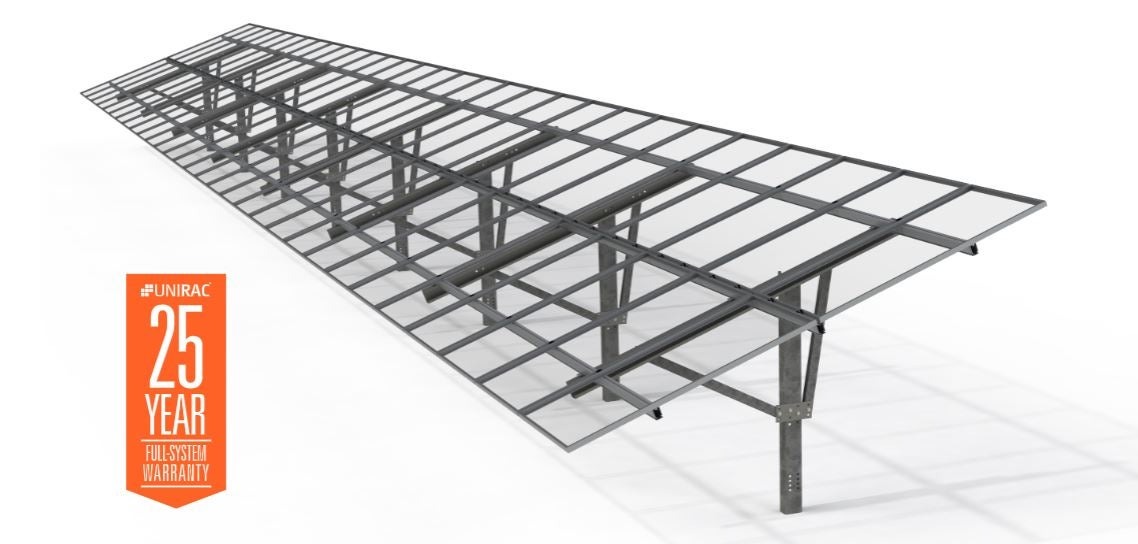
Image source: Unirac
The Unirac Ground Fixed Tilt is another great choice - it is durable and lightweight and also has a 25-year warranty. Unirac ensures fast shipping times and ease of construction. You can work with a licensed solar installer to determine which ground mount system is best for your terrain and solar panels.
How much will a solar panel system plus racking and mounting cost?
Including racking and mounting, an average 6kW solar system would cost about $18,000 given the US average solar panel cost of about $3.00 per watt as of January 2023. After applying the federal solar tax credit of 30%, that works out to $12,600.
It is up to you and your energy needs whether or not you want to install solar tracking systems, but generally, installing either roof or ground-mounted solar panels will work for any home.
Working with licensed installers is the best way to determine which solar panel mount system will work best for your roof. If you research mount brands and have a preference, you can discuss your options with your solar installer. Enter your zip code below to find out the potential savings for installing solar panels with solar panel mounts on your home.
Key takeaways
Solar panel mounts secure solar panels either to your roof or on the ground.
Solar panel mounts typically account for 10% of the total solar panel installation cost.
IronRidge and Unirac are the best options for roof and ground mount solar systems.
Ana is the Marketing & Communications Manager at SolarReviews, working within the solar industry since 2020. With a Master's in Climate and Society and professional experience in marketing, she helps communicate the value of solar to homeowners and build awareness of the SolarReviews brand. On weekends you can find her at the Jersey shore, reading a book from the ever-increasing stack on her side table, or eating food someone else cooked....
Learn more about Ana Almerini